
- Home
- Louis L'Amour
Novel 1965 - The Key-Lock Man (v5.0)
Novel 1965 - The Key-Lock Man (v5.0) Read online
Contents
Cover Page
Title Page
Bound in Life and Death
Dedication
Chapter 1
Chapter 2
Chapter 3
Chapter 4
Chapter 5
Chapter 6
Chapter 7
Chapter 8
Chapter 9
Chapter 10
Chapter 11
Chapter 12
Chapter 13
Chapter 14
Chapter 15
About the Author
Bantam Books by Louis L’Amour
Copyright Page
BOUND IN LIFE OR DEATH
SHE HEARD A shot. It was far off, but the sound slapped against the cliffs and went echoing off down the wall of rock. Her heart pounding, Kris started forward, standing in the stirrups for a better view. She felt almost sure it was Matt’s horse.…
There was dust down there; and then there were more shots. She was too far away to get there in time if help was needed. If Matt could escape at all, he would be escaping to her, coming to her for help, for food, for ammunition. She went on steadily along the narrow bench. And then something made her look back.
Three riders!
The face of the cliff curved back suddenly, and there in the notch she saw the deep cut of the beginning canyon, and a heavy growth on the far side. Swiftly she herded the pack mules into the gap and, grasping her rifle, she dropped to the ground.
This was where Matt had said he would come; and this was where she would stay until either he came or she knew beyond doubt that he was dead.
To Dutch Sam
who missed when it mattered
Chapter 1
THE MAN CALLED Key-Lock was a man alone, and before him lay wilderness. Behind him were searching men, and each was armed, each carried a rope. Each rope was noosed for hanging, and each man was intent on the purpose of the chase.
The solitary rider did not fear his aloneness, for he had the companionship of the mind. He had strength also, patience beyond that of most men, and some knowledge of the wild lands into which he rode. If the men who pursued knew nothing of him, he at least knew their kind, and was stronger because of this.
They were men shaped and tempered to the harsh ways of a harsh land, strong in their sense of justice, ruthless in their demand for punishment, relentless in pursuit. In the desert and the wilderness they had built their homes, and from the desert and the wilderness they drew their courage and their code. And the desert knows no mercy, the wilderness shows no kindness.
Before the man called Key-Lock lay a land fragmented and torn, a magnificent land, gnarled and ancient. It was a land of shattered battlements, broken towers, and the headless figures of vast and shapeless gods. An empty land, yet crowded with epics in stone, harried by wind and thunderstorm, ripped by flash floods, blistered by summer’s heat, frozen by winter’s cold.
He rode now in Arizona, but beyond the horizon to the north lay Utah, and between himself and the border, a desert. Between himself and escape—if he chose to escape—lay an almost waterless waste in which he must trust to his ingenuity to keep him free.
The border lay ahead, but the border was merely a line on a map, and did not exist in the minds of the men who pursued him. If they knew of this border, it would have no place in their thinking, for to them he had already crossed another border, a border between the law and the lawless, between the right and the wrong, between what was done and what was not done.
To kill a man who faced you with a gun was in their minds no crime, nor was it a crime in the customs of their period. In the East and in Europe men settled affairs of honor with pistols, but according to plan and ritual. In the West, in what was a new world, where men were often strangers to each other, the settling of such an affair was immediate, and without ritual.
To shoot a man in the back, however, was a crime, and this they believed he had done, and for this he must be hung.
But it was not enough for the man called Key-Lock to understand the philosophy of the hunters; the important thing for him was to escape them.
Though he knew none of the men back there personally, he knew there must be good men among them, and on a different occasion he might have been riding as one of them, the pursuer instead of the pursued. For he had worked beside such men, fought beside them, and he knew that they were hardworking men, stern but just, according to their code. When such men come to a new land the law comes with them, for they are builders of homes, builders of towns, layers of foundations.
And now he must escape or fight. If he fought, he must be prepared to kill, and he had no enmity for these men…not yet.
WHERE’S HE BOUND?”
“Home, more’n likely. He’ll need an outfit if he aims to run far…if we don’t get to him first.”
“Where’s he live?”
“He was a stranger, and had no trail outfit with him. Over to the store they said that when he taken out to get away, the one thing he latched onto was a woman’s comb.”
“A comb?”
“Seems daft, but that’s what was told us. One of those fancy combs like Spanish women wear in their hair. He rummaged through all that grub and truck in the store just for that.”
Kimmel’s eyes narrowed against the sun’s hard glare. “He’s got him a good horse. Moves right along.”
“Big buckskin,” Chesney said. “I seen the horse. Wears a Key-Lock brand. A key alongside a keyhole—never seen it before.”
For a few minutes silence rode among them, except for the beat of their horses’ hoofs and the creak of saddle leather.
“He’s covering ground, all right.” Neill was the youngest of them, and he felt the need of words. He was also the latest to arrive in this part of the country—only four years ago.
Hardin was the best of them at reading sign, and from the first he had been disturbed that the rider had not put his horse to the run. He held him to a steady, distance-eating gait, but showed no inclination to make a sudden dash to get away. Studying those tracks, and reading what they indicated, Hardin had an uneasy feeling that they had brought themselves a packet of trouble.
“He’s no tenderfoot.” Chesney expressed the thought Hardin held. “He’s covering ground, but he knows how to save a horse, and he knows wild country.”
Dust lifted from the hoofs of their horses. The sun was hot upon their shoulders. The land was parched and baked. Dancing heat-waves promised water that was not there, and the distant blue of mountains a coolness they would not provide.
The trail lay straight before them. Only at clumps of rock or thorny brush did it swerve. Like a thrown lance, it seemed to thrust at the distant heart of the hills. The six men of the posse rode warily, their thoughts uneasy about what lay in the mind of the man they pursued.
You can know a man if you follow his trail, if you follow long enough. By his tracks on the land the ways of a man are made plain—his kindness or his cruelty, his ignorance or his cunning, his strength or his weakness. Many a man who could read not a word of print could read character, story, and plot from a pattern of tracks, and from the building of fires.
In the hours of riding since leaving the town of Freedom, these men had learned much, but they had much still to learn.
“What started it?” one of them asked now.
In the vast hollow of silence the words hung empty and alone.
Hardin turned his head in the manner of a man who rides much in the wind, and let the words drift back. As he spoke he shifted the rifle from one hand to the other to dry his sweaty palms upon his shirt front.
“Loose talk. He was buyin’ grub in the Bon To
n an’ took offense at something Johnny said. Johnny was wearin’ a gun, an’ the Key-Lock man wasn’t, so Johnny told him to go fill his hand or he’d hunt him down anyway.
“Johnny was in the saloon when he came back an’ pushed the door open an’ shot Johnny twice in the back whilst he stood drinkin’ at the bar. Third shot busted a bottle of whiskey.”
After a moment’s silence, Neill asked slyly, “We hanging him for killing Johnny, or for busting the whiskey?”
It was a fair question, but the dignity of the riders and their mission was not to be lightened by humor. They offered no reply, nor any acknowledgment that he had spoken.
Neill’s eyes wandered over the white and copper land, cut here and there by deep arroyos or ridged by the raw backs of ancient lava flows. He held no liking for the lynching of any man, and he knew nothing of the one for whom they hunted, beyond what had been told him. The men he rode with were his friends and neighbors, the men with whom he shared work and their few pleasures.
Like himself, they had come to this wild land bringing the potential of home, and homes demanded order and consideration for the rights of others, a recognition of the necessities of regulations and law. Their women folk came with them or followed after, bringing their own desires, among them the need for church and school, for human association.
The town of Freedom had only such law as its citizens chose to provide. If lawlessness was wary of Freedom, it was due to the fact that, as in most western towns, the butcher, the baker, and the banker were veterans of the War Between the States and the Indian wars. Every citizen had grown to manhood handling guns, and all were prepared to use such weapons when need be. The idea of some gunman or band of outlaws “treeing” a western town was known, but here it had never happened.
The James-Younger band tried it at Northfield and they were run out of town, shot to doll rags and leaving their dead behind; the Daltons tried it at Coffeyville, and the one man who survived had sixteen buckshot in him. There were a few other attempts, no more successful—often to the regret of the townspeople, for such attempts came under the head of entertainment in towns where there was not much of any other kind.
The gunman stayed to his side of town, like the gambler and the lady of light company, and was tolerated as long as he offered no trouble to the established citizenry.
Freedom was scarcely old enough to have the need to draw such a line, and as yet there was no law except such as was administered by themselves. However, they had all known Johnny, and Johnny had been shot in the back.
“Who saw the shooting?” Neill asked.
“Nobody saw it, actually. Sam was tendin’ bar, but he was down at the other end and it happened too fast. But this Key-Lock man couldn’t have given Johnny a chance. Johnny was too good with a gun.”
Johnny, Neill recalled, was far better than just good with a gun. He was damned good, and prided himself on the fact. Neill felt a twinge of uneasiness, and then a faint sense of guilt that he should for an instant doubt anything that was said of Johnny; but he couldn’t help recalling that Johnny was a little less than friendly to strangers.
The dust grew thicker, and Neill pulled his bandana up over his mouth and nose as the others had. His eyes sought the shimmering blue of those distant lakes. Enticing and lovely, they lay across the trail ahead and in the bottoms off to the right. They were mirage, but many a man had been led to his death by their ever-retreating shore lines.
Maybe there was water in those heat waves if a man only knew how to extract it. The thought drew his hand to his canteen, where the slosh of water was inviting, but he knew that by this time the water was warm and brackish, and too little of it remained. Moreover, none of the older men had yet shown any inclination to drink.
“Will you know him if you see him, Kimmel?” Chesney asked.
“He’s a big man, maybe on the lean side, but strong-made. Maybe thirty-five. No hand to talk about his business, but over to the store where he did his buying folks said he shaped up like a mighty hard piece of merchandise.”
Chesney himself was a wiry man with strong brown hands. He was hard as a whipstock, with bits of sharp steel for eyes. He had built his outfit carefully, driving in a few head when he first came, and tending them like a dairy herd through the first season. He was a good man and a good neighbor, but there was no give in him. He was stubborn in his opinions and a driver, pushing hard on himself and all about him. He had been the first to reach Neill’s place that time when a prairie fire threatened.
Kimmel had been a close second, racing his wagon as if it was a buckboard, and it was filled with sacking already wet, and with shovels. Last year when Hardin was laid up with a broken leg, Kimmel fed Hardin’s stock and his own too, all through a hard winter, and he had a long ride every day to do it.
Chesney and Johnny had been saddle partners on the old Squaw Mountain round-ups, and when Chesney drove his small herd into this part of the country, Johnny had come along to see him through, then located a place of his own and stayed on.
Johnny Webb had been a dare-devil and a hellion, but he was well liked for all of that. He laughed a lot, played practical jokes, and was ready to break a horse for anybody just for the hell of it. He was fast with a gun, and no man was likely to beat him in a fair, stand-up shooting.
When Neill had come into the country, he had quickly realized the kind of community he had entered and he built solid friendships. There was a lot he did not know about the West, for back in Ohio he had been a farmer, but he was catching on fast. When they invited him to be a posse member he knew he had been accepted and was one of them. It was an honor to ride beside such men into what might become a shooting affair.
Neill stared at the tracks of the big buckskin and felt a queer sensation when he realized the rider of that horse might soon be dead, hung by the neck, and Neill’s own hand would be on that rope.
He had never killed a man—not even an Indian—nor seen one killed. He was probably the only man in the group of whom that could be said.
Now Johnny Webb was gone, Johnny with his laughter and his jokes, brightening more than one day’s work on the range. And Neill was feeling guilty at remembering that he had never really liked Johnny, and that there had been strain between them when Neill first came into this part of the country. It was only after Chesney accepted him, and after Johnny apparently realized that Neill was not a potential rival that a sort of friendship developed.
Johnny might have been a little overanxious with that gun, Neill thought, but he deserved something better than a shot in the back.
“He’s afoot,” Chesney said suddenly, “leadin’ his horse.”
“He’s a big man,” Hardin said, “and he figures to give us a long chase.”
“His horse has gone lame, maybe,” McAlpin suggested.
“No, that horse doesn’t limp. He’s just a canny one, that’s all.”
A mile fell behind them, and then another mile. The deep dust gave way to a parched dry plain of desert sand. Hardin indicated a couple of flecks on the sand-crust where something had spilled. “Water,” he said.
“He’ll need that water,” Neill said. “He’d best go easy with it.”
“Bet you a dollar he was wipin’ out his horse’s nostrils,” Chesney said. “Dust interferes with a horse’s breathing, and a man could kill a horse, runnin’ him on this flat.”
The man they pursued was not running his horse, but if they caught up with him, he would have to run. Neill mopped his brow, and wiped the sweatband of his hat. He thought of his wife and the milk she kept in a stone jug in the well. It would taste almighty good about now.
Suddenly he looked at the sun. It had been on the left, but now it was on the right, for the trail had swerved sharply. Hardin, who was riding point, swore.
Riding up beside him, the men found themselves looking into a draw that cracked the desert’s face only a few rods away. There was a place where a horse had been tethered, and a bit of white fluttered from a rock
.
Chesney rode down into the draw to pick it up, and they heard him swear again. Scrambling his horse back up the draw, he passed the paper to Hardin. It looked like a leaf torn from a tally book. On it a message was scrawled.
That was a fair shootin anyway six ain’t nowhars enuf. go fetch more men. man on the gray better titen his cinch or heel have him a sore backed hoss.
The note was unsigned.
“Why, the low-livin’ skunk!” Short spoke half under his breath. “Not forty yards off, and him with a rifle.”
Neill, his face flushed with anger, was tightening his cinch. Nobody appeared to notice him; they were as embarrassed as he was himself. The note was an insult to all of them, even if the advice was good. They were angry men, but they were frightened men, too. It gave them an eerie feeling to realize that the man they were hunting had been lying within easy range, close enough to kill one or more of them before they could either attack or take shelter.
The man was playing Injun with them, and they did not like it. Their dignity was offended, but more than that, they realized they had been grossly negligent. They had taken it for granted the man was out there in front of them, running.
“Fair shootin’, hell!” McAlpin said. “Right in the back!”
They went ahead now with increased caution. Their quarry had circled about and allowed them to pass, and he might be watching close by even now. Until this moment they had been the hunters; now they felt that they themselves were hunted.
Deliberately, the man they sought was using every trick to make pursuit more difficult. The note had the effect of slowing them to the slowest of walks. They must pause, circle each place of possible ambush, proceed with utmost watchfulness. Each time they took these precautions they found nothing, yet each time they might have been met with a bullet.
 Novel 1987 - The Haunted Mesa (v5.0)
 The Haunted Mesa (Louis L'Amour's Lost Treasures)
 The Walking Drum (Louis L'Amour's Lost Treasures)
 Fallon (Louis L'Amour's Lost Treasures)
 Golden Gunmen
 Comstock Lode
 The Lonesome Gods (Louis L'Amour's Lost Treasures)
 No Traveller Returns (Lost Treasures)
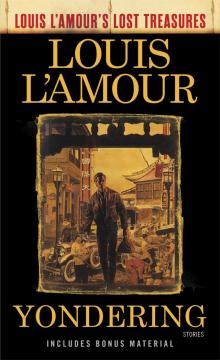 Yondering: Stories
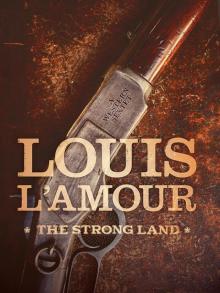 The Strong Land
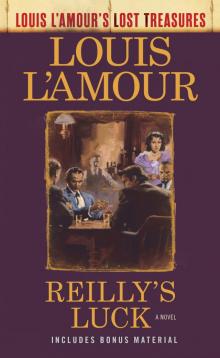 Reilly's Luck (Louis L'Amour's Lost Treasures)
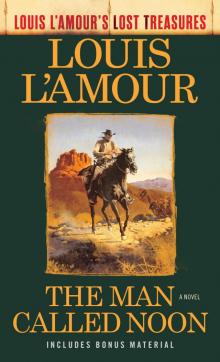 The Man Called Noon (Louis L'Amour's Lost Treasures)
 Draw Straight
 Last of the Breed (Louis L'Amour's Lost Treasures)
 Taggart (Louis L'Amour's Lost Treasures)
 The Hopalong Cassidy Novels 4-Book Bundle
 Bowdrie_Louis L'Amour's Lost Treasures
 Reilly's Luck
 The Ferguson Rifle (Louis L'Amour's Lost Treasures)
 Sacketts 00 - The Sackett Companion (v5.0)
 The Chick Bowdrie Short Stories Bundle
 Novel 1974 - The Californios (v5.0)
 Collection 1983 - Bowdrie (v5.0)
 Novel 1984 - The Walking Drum (v5.0)
 Over on the Dry Side
 The Walking Drum
 Novel 1963 - Catlow (v5.0)
 Borden Chantry
 Collection 1983 - Law Of The Desert Born (v5.0)
 Ghost Towns
 Jubal Sackett (1985) s-4
 Novel 1953 - Showdown At Yellow Butte
 Kilkenny 03 - Kilkenny (v5.0)
 Novel 1969 - The Empty Land (v5.0)
 Matagorda
 The First Fast Draw
 Novel 1950 - Westward The Tide (v5.0)
 Ride the Dark Trail s-18
 Novel 1963 - Fallon (v5.0)
 Novel 1964 - Kiowa Trail (v5.0)
 Kilkenny
 Riders of the Dawn
 Sackett (1961) s-9
 Fallon
 Ride the River (1983) s-5
 Mojave Crossing s-11
 Novel 1958 - Radigan (v5.0)
 The Collected Short Stories of Louis L'Amour, Volume Five
 Novel 1953 - Showdown At Yellow Butte (v5.0)
 Collection 1980 - Yondering
 Novel 1957 - Last Stand At Papago Wells (v5.0)
 North To The Rails
 The Kilkenny Series Bundle
 Novel 1972 - Callaghen (v5.0)
 Novel 1970 - Reilly's Luck (v5.0)
 The Lonesome Gods
 Novel 1963 - How The West Was Won (v5.0)
 Collection 2001 - May There Be A Road (v5.0)
 Flint
Flint Novel 1968 - Chancy (v5.0)
 Volume 1: Unfinished Manuscripts, Mysterious Stories, and Lost Notes from One of the World's Most Popular Novelists
 Novel 1962 - High Lonesome (v5.0)
 Fair Blows the Wind (Louis L'Amour's Lost Treasures)
 Lando s-8
 The High Graders
 Collection 1986 - Night Over The Solomons (v5.0)
 The Collected Short Stories of Louis L'Amour, Volume 3
 Collection 1980 - Yondering (v5.0)
 Showdown
 The Quick And The Dead
 Novel 1968 - Down The Long Hills (v5.0)
 The Lonely Men s-14
 Bowdrie (Louis L'Amour's Lost Treasures)
 Treasure Mountain s-17
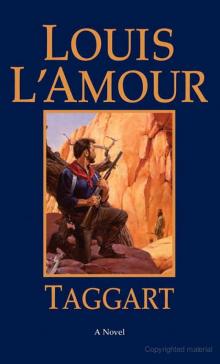 Novel 1959 - Taggart (V5.0)
 The Collected Short Stories of Louis L'Amour, Volume 7
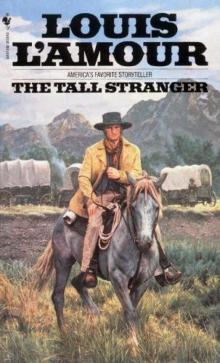 Novel 1957 - The Tall Stranger (v5.0)
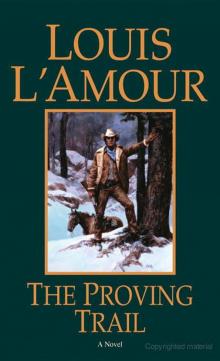 Novel 1978 - The Proving Trail (v5.0)
 Callaghen (Louis L'Amour's Lost Treasures)
 Sitka
Sitka Collection 1988 - Lonigan (v5.0)
 The Californios
 Novel 1966 - The Broken Gun (v5.0)
 Bendigo Shafter (Louis L'Amour's Lost Treasures)
 Novel 1979 - The Iron Marshall (v5.0)
 Novel 1957 - The Tall Stranger
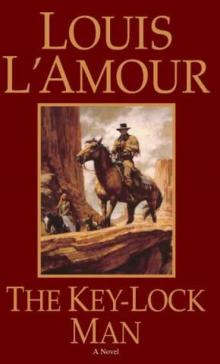 Novel 1965 - The Key-Lock Man (v5.0)
 Collection 1986 - Dutchman's Flat (v5.0)
 Lonely On the Mountain s-19
 Sackett's Land
 The Man Called Noon
 Hondo (Louis L'Amour's Lost Treasures)
 The Lawless West
 The Warrior's Path (1980) s-3
 Novel 1956 - Silver Canyon (v5.0)
 The Sky-Liners (1967) s-13
 Mustang Man s-15
 Novel 1971 - Tucker (v5.0)
 Off the Mangrove Coast (Louis L'Amour's Lost Treasures)
 Collection 2005 - Riding For The Brand (v5.0)
 Collection 1986 - The Trail To Crazy Man (v5.0)
 Silver Canyon
 The Man from Battle Flat
 The Daybreakers (1960) s-6
 Kid Rodelo (Louis L'Amour's Lost Treasures)
 Milo Talon
 Novel 1973 - The Man From Skibbereen (v5.0)
 Novel 1965 - The High Graders (v5.0)
 The Sacket Brand (1965) s-12
 Rivers West
 Novel 1970 - The Man Called Noon (v5.0)
 Education of a Wandering Man
 The Collected Short Stories of Louis L'Amour, Volume 1
 Collection 1989 - Long Ride Home (v5.0)
 Callaghen
 Collection 1999 - Beyond The Great Snow Mountains (v5.0)
 West of the Tularosa
 End Of the Drive (1997) s-7
 Novel 1986 - Last Of The Breed (v5.0)
 Novel 1966 - Kilrone (v5.0)
 Chancy
 Desert Death-Song
 Novel 1959 - The First Fast Draw (v5.0)
 Kilkenny 02 - A Man Called Trent (v5.0)
 Lost Trails
 Novel 1972 - Callaghen
 Novel 1966 - Kid Rodelo (v5.0)
 The Collected Short Stories of Louis L'Amour, Volume 2
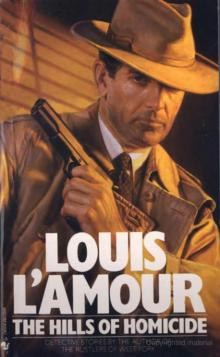 Collection 1983 - The Hills Of Homicide (v5.0)
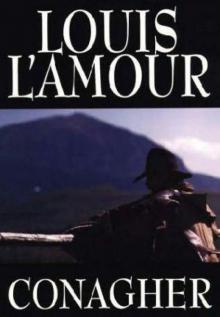 Novel 1969 - Conagher (v5.0)
 Radigan
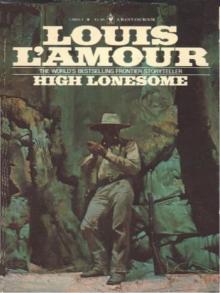 High Lonesome
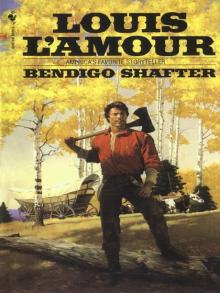 Bendigo Shafter
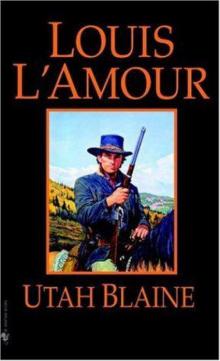 Novel 1954 - Utah Blaine (As Jim Mayo) (v5.0)
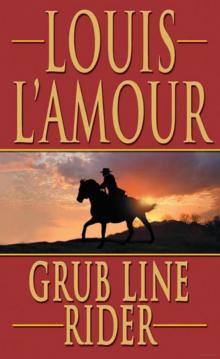 Collection 1990 - Grub Line Rider (v5.0)
 Mistakes Can Kill You
 The Iron Marshall
 Novel 1963 - Dark Canyon (v5.0)
 Novel 1955 - Heller With A Gun (v5.0)
 Novel 1978 - Bendigo Shafter (v5.0)
 Collection 1997 - End Of The Drive (v5.0)
 Fair Blows the Wind
 Talon & Chantry 07 - North To The Rails (v5.0)
 The Trail to Crazy Man
 To the Far Blue Mountains (1976) s-2
 Collection 1981 - Buckskin Run (v5.0)
 Collection 2008 - Big Medicine (v5.0)
 Collection 2003 - From The Listening Hills (v5.0)
 Collection 1995 - Valley Of The Sun (v5.0)
 Glory Riders
 Guns of the Timberlands
 The Collected Short Stories of Louis L'Amour, Volume Four
 Novel 1968 - Brionne (v5.0)